

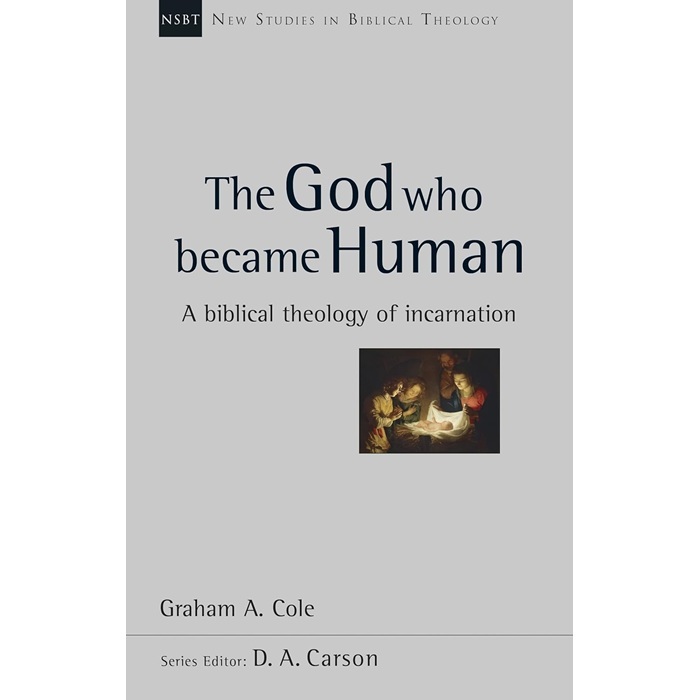
Description
The study of themes plays a major part in biblical theology, and great events and roles that are pivotal in Christology can be successfully placed in a 'promise-fulfilment' framework. However, is incarnation an anomaly? Was incarnation part of the hope of Israel?
Graham Cole's stimulating study addresses such questions. He begins by exploring the purpose of creation in terms of God fashioning a palace-temple for dwelling with the creature made in the divine image, then follows God's acts in Israel's history to redeem a people of his own among whom he can dwell. In particular, he examines theophanic language: God is presented as a person who speaks, acts and feels as though embodied. He considers Israel's messianic hope, and then the testimony of the New Testament: 'The Word became flesh and dwelt among us' (John 1:14), in the person of Jesus Christ.
Cole also addresses the question raised by Anselm - 'Why did God become man?' - and finds abundant New Testament answers. He concludes with a consideration of the theological and existential significance of the incarnation.
Readers will gain a deeper appreciation of the astonishing providence of God that subtly prepared the way for the mystery of the incarnation, and of the depth of love that God showed in sending the beloved Son who became human.
Table of Contents
Series preface
Author's preface
Abbreviations
Introduction
1 God prepares the way from the beginning
God and God's image
The portrayal of God in the beginning
Some early Christian commentary
God prepares the way to what end?
God prepares the way by promise
Conclusion
Excursus: Would the incarnation have taken place irrespective of the
Fall?
2 God prepares the way in his dealings with Abraham and
Abraham's Old Testament children
The patriarchal story and the 'embodied' God
Abraham and the three visitors
Jacob and the wrestler
The Mosaic story and the 'embodied' God
The Judges story and the 'embodied' God
The former prophets and the 'embodied' God
The latter prophets and the 'embodied' God
Conclusion
3 God prepares the way in Israel's hope
The hope for a divine Messiah
Israel's hope and the incarnation: key texts revisited
Intertestamental hopes
Typology and incarnation
Conclusion
4 The great mystery
In retrospect
But incarnation?
Conclusion
Excursus: the pre-incarnate Christ, theophany and the Old Testament
debate
5 Cur Deus homo
New Testament answers
The timing of the incarnation: insight from Thomas Aquinas
Conclusion
Excursus: Did the divine Son assume fallen or unfallen human
nature?
6 The significance of the incarnation
Theological significance
Existential significance
Conclusion
7 Conclusion
Appendix: The theological interpretation of Scripture
Bibliography
Index of authors
Index of Scripture references
Index of ancient sources
Product Details
Title: The God Who Became Human: A Biblical Theology Of Incarnation
Author: Graham A. Cole
Publisher: Apollos
Pages: 240
Binding: Paperback
Size: 21.6 x 13.7 x 1.5 cm
ISBN: 9781844748006